
[av_heading tag=’h2′ padding=’10’ heading=’The Five Most Significant Dangers of Compressed Air’ color=” style=” custom_font=” size=” subheading_active=” subheading_size=’15’ custom_class=” admin_preview_bg=” av-desktop-hide=” av-medium-hide=” av-small-hide=” av-mini-hide=” av-medium-font-size-title=” av-small-font-size-title=” av-mini-font-size-title=” av-medium-font-size=” av-small-font-size=” av-mini-font-size=” margin=”][/av_heading]
[av_hr class=’default’ height=’50’ shadow=’no-shadow’ position=’center’ custom_border=’av-border-thin’ custom_width=’50px’ custom_border_color=” custom_margin_top=’30px’ custom_margin_bottom=’30px’ icon_select=’yes’ custom_icon_color=” icon=’ue808′ av-desktop-hide=” av-medium-hide=” av-small-hide=” av-mini-hide=” av_uid=’av-6bmxvj’]
[av_image src=’https://dev.plibrico.com/wp-content/uploads/2019/12/Plibrico_Company-Compressed_Air_Safety-300×199.jpg’ attachment=’4508′ attachment_size=’medium’ align=’center’ styling=” hover=” link=” target=” caption=” font_size=” appearance=” overlay_opacity=’0.4′ overlay_color=’#000000′ overlay_text_color=’#ffffff’ copyright=” animation=’no-animation’ av_uid=’av-3x95pr’ custom_class=” admin_preview_bg=”][/av_image]
[av_textblock size=” font_color=” color=” av-medium-font-size=” av-small-font-size=” av-mini-font-size=” av_uid=’av-1yz5gv’ custom_class=” admin_preview_bg=”]
The Keys to Preventing or Controlling
Compressed Air Safety Hazards
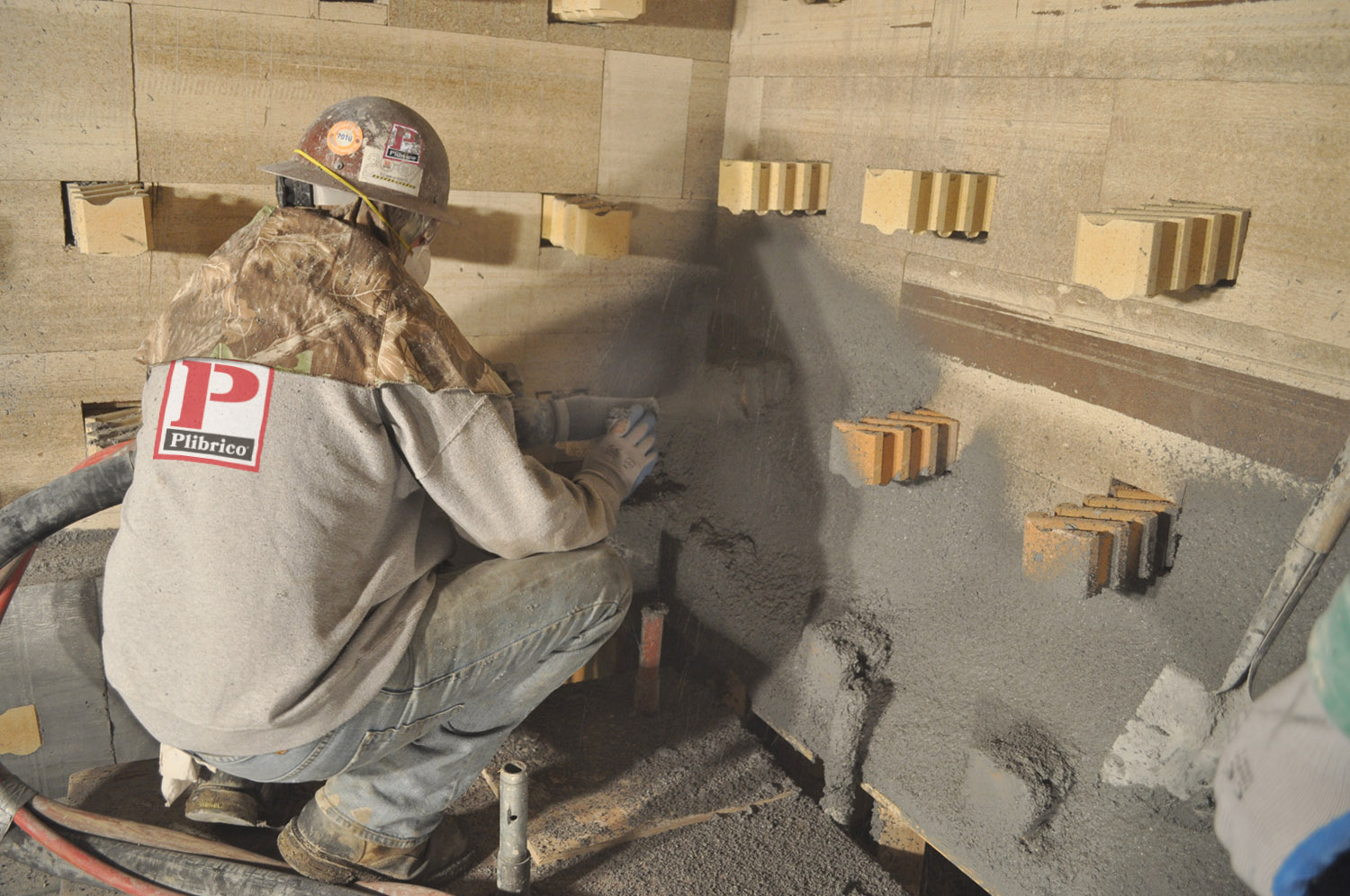
The use of compressed air is essential on most construction jobsites and production lines. For thermal operations and processing companies, compressed air assists with the removal, repair, and installation of refractories that keep employees and materials safe.
Compressed air supplies the energy required to drive vital refractory equipment, such as portable pumps, nozzles, and demolition tools. With the correct safety procedures, compressed air is safe to use, has a very low weight-to-volume ratio, is easy to store, and is nonflammable. However, equipment that requires compressed air at higher pressures to operate, such as portable mixers, gun machines, jack hammers, and shotcrete, can pose a risk, especially when used without safety devices or good working conditions.
To prevent or control hazards, safety equipment and safe work practices are required. Here are five safety precautions to take when using compressed air:
- LOCATION: Portable compressors that are run by internal combustion engines can generate deadly carbon monoxide from the exhaust gases produced in tight spaces. To prevent any problems, select a safe location with good ventilation to stage any portable compressors. Equipment should be positioned away from foot and vehicle traffic. Wheel chocks should be used to prevent drifting.
- HOSE CONNECTIONS: Pressurized hoses can unintentionally become detached from equipment or from the couplings site and can begin to lash. Whipping hoses are known to break bones and cause cuts, contusions, and lacerations to those standing close by. To keep everyone safe, use safety coupling pins and whip checks on all hose connections.
- TRIPPING HAZARD: Hoses left strewn across walkways and equipment paths or near high-traffic areas increase the chances of a serious accident. To avoid trips and falls, hang all hoses away from walking and traveling areas.
- RESPIRATORS: Using compressed air can increase dust particles in the surrounding air, making the air hazardous to breathe. Wear respirators when blasts of air suspend dust into the atmosphere.
- PROPER PPE: Never use compressed air to clean workstations or clothing. Horseplay with compressed air is particularly dangerous:
- An eardrum can be ruptured or an eye blown out of its socket with as little as 12 lbs. of air pressure.
- Oil and grease atomized in the compressed air stream can also cause infection if accidently injected into the skin and may lead to limb amputation.
- Compressed air blown into the skin can obstruct an artery and result in an air embolism. This is a condition where a pocket is created by the blast of air inside a blood vessel. Once this pocket of air enters the brain or heart, it can lead to stroke or sudden cardiac arrest.
- Proper personal protective equipment (PPE), such as safety glasses, face shields, hearing protection, gloves, and long-sleeved shirts, are important to harness the hazards.
It is also a good idea to provide or locate the nearest fire extinguisher to any portable air compressor for emergency purposes.
Compressed air use is required to drive many of the different tools used for the demolition, repair, and installation of refractories used to protect thermal processing equipment. Hazard awareness and safety training allows for refractory crews to use compressed air in a safe and efficient way to complete complex tasks.
For more information please contact Plibrico at 312-337-9000, or contact@plibrico-company.websitepro.hosting
[/av_textblock]