
[av_heading tag=’h2′ padding=’10’ heading=’How Boiler Burners Impact Your Wallet’ color=” style=” custom_font=” size=” subheading_active=” subheading_size=’15’ custom_class=” admin_preview_bg=” av-desktop-hide=” av-medium-hide=” av-small-hide=” av-mini-hide=” av-medium-font-size-title=” av-small-font-size-title=” av-mini-font-size-title=” av-medium-font-size=” av-small-font-size=” av-mini-font-size=” margin=”][/av_heading]
[av_hr class=’default’ height=’50’ shadow=’no-shadow’ position=’center’ custom_border=’av-border-thin’ custom_width=’50px’ custom_border_color=” custom_margin_top=’30px’ custom_margin_bottom=’30px’ icon_select=’yes’ custom_icon_color=” icon=’ue808′ av-desktop-hide=” av-medium-hide=” av-small-hide=” av-mini-hide=” av_uid=’av-6bmxvj’]
[av_image src=’https://dev.plibrico.com/wp-content/uploads/2020/07/Plibrico_Mechanical_Services-Burner_Maintenance-268×300.jpg’ attachment=’4821′ attachment_size=’medium’ align=’center’ styling=” hover=” link=” target=” caption=” font_size=” appearance=” overlay_opacity=’0.4′ overlay_color=’#000000′ overlay_text_color=’#ffffff’ copyright=” animation=’no-animation’ av_uid=’av-3x95pr’ custom_class=” admin_preview_bg=”][/av_image]
[av_textblock size=” font_color=” color=” av-medium-font-size=” av-small-font-size=” av-mini-font-size=” av_uid=’av-1yz5gv’ custom_class=” admin_preview_bg=”]
Three Ways Boilers and Their Burners Can Affect
A Company’s Bottom Line
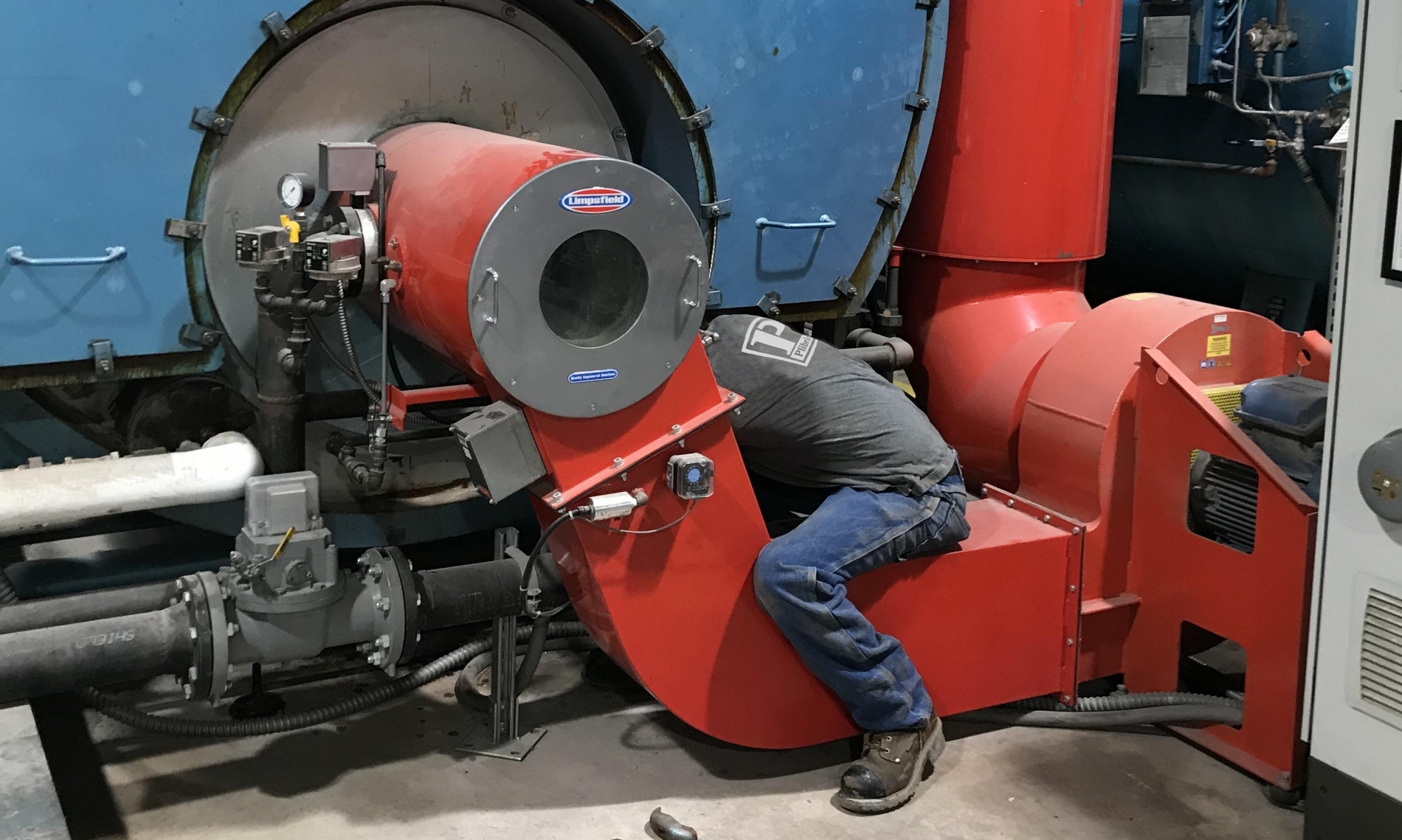
Boilers and their burners are a major cost factor in most industrial processes, critical commercial operations, and institutions. Therefore, it makes good financial sense to optimize these systems so they are operating at peak efficiency.
Throughout the different thermal processes, energy is lost due to equipment inefficiencies as well as mechanical and thermal limitations. Companies find that over time burner settings will drift due to component wear, temperature, dirt, soot and leaks. This drifting can ultimately affect an organization’s fuel usage, equipment efficiency, and product quality.
Understanding how energy is used and wasted can help companies identify ways to improve efficiency. Consider these three ways boilers and their burners impact a company’s bottom line:
1. Fuel Economy: On average, a boiler will consume in fuel four times its initial cost every year. Substantial savings can be achieved if your boiler, including the burner, has a regular maintenance schedule that is based on operating conditions.
Like a carburetor in your favorite old car, burners are typically tuned in the summer and winter months. Tuning optimizes the fuel/air ratio for the ambient air, warm air during the summer months and cool air during colder winter months so that the boiler operates more efficiently while maintaining safety. The burner tuning procedure is complex and exacting, since every 2% increase in O2, can result in a loss of 1% in efficiency. An improperly tuned burner is just as bad as an out of tune burner.
To fully reap financial benefits, it is critical to work with a knowledgeable, experienced and qualified industry expert. A tighter control of the air/fuel ratio, results in a better control of the combustion reaction and its efficiency. On average, companies with industrial boilers that have regular tuning schedules can see a 1% – 2% fuel savings.
2. Boiler Stress: A maintenance schedule that includes regular boiler cleanings can help avoid costly stress on a company’s boiler. Without regular cleanings, heavy sooting will occur due to incomplete combustion of the fuel air mixture of the burner. Buildup of this heavy soot will start to insulate the inside of the boiler resulting in heat transfer efficiency becoming less and less as more and more heat starts to escape through the boiler stack. The damaging soot accumulation will also generate hot spots within the boiler which can eventually lead to boiler cracks, stress fractures, ligament fissures and reduction of heat transfer in the boiler. The devastating result can be exceedingly costly repairs or purchase of a new unit.
3. EPA Compliance: To decrease air pollution produced from boilers (carbon monoxide, hydrochloric acid, mercury, and trace amounts of other heavy metals) the US Environmental Protection Agency (EPA) has put in place boiler and burner tune up requirements. Most companies operating an industrial, commercial or institutional boiler must comply with the EPA compliance requirements for source boilers, National Emission Standards for Hazardous Air Pollutants for Area Sources – NESHAP (40 CFR part 63). Without these mandatory tune ups, companies can face both civil and criminal penalties that could include daily fines and even imprisonment.
All the issues listed can contribute to a less-than-optimal use of fuel, energy and equipment, in addition to increases in operating costs.
The burner is really at the heart of boiler efficiency, if you don’t have a good burn, and decent heat transfer, it seriously limits operations. As a result, top priority should go to keeping an organization’s burner tuned by a knowledgeable expert. The damage that can be caused by an improperly tuned burner is almost as great as that of a totally untuned burner, and in a fuel-rich environment could lead to an explosion.
Whether you tune your boiler and burner regularly for compliance reasons, cost efficient, or both, keeping them tuned should be an integral part of any industrial, institutional and commercial maintenance program.
For more information regarding boiler and burner services please contact Plibrico Company Mechanical Services at 402-345-3224, or contact@plibrico-company.websitepro.hosting
[/av_textblock]